
Goddess Chandraghanta: The Divine Energy of Beauty, Courage and Inner Strength
On the third day of Navratri, devotees worship Goddess Chandraghanta, the third manifestation of Goddess Durga. She represents the divine power that brings beauty to life, courage to the heart, and clarity to the mind. Her form reminds us that spirituality is not merely about seeking peace outside ourselves, but about discovering the divine presence within every thought, emotion and experience.
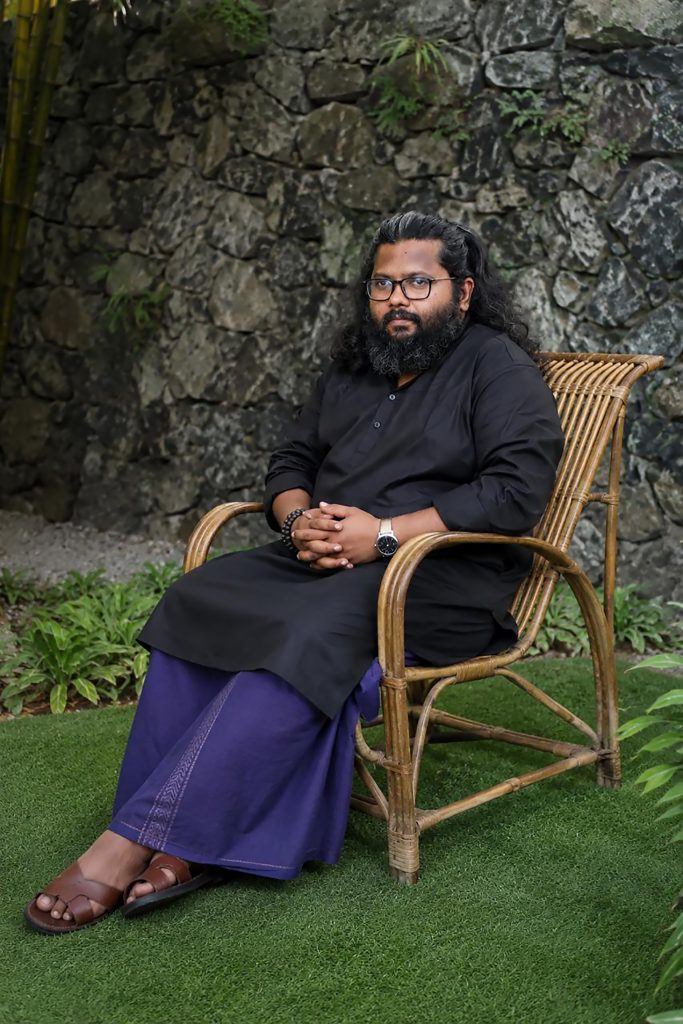
According to the spiritual teachings shared by Yogi Paravoor Sudheesh, the journey towards inner awakening begins when we learn to understand the mind, cultivate discipline and recognise the deeper consciousness that connects us with the Divine.
Goddess Chandraghanta inspires us to harmonise our thoughts, overcome fear and face life’s challenges with confidence, compassion and spiritual awareness.
The Spiritual Significance of Devi Chandraghanta
The name Chandraghanta is formed from two Sanskrit words: Chandra, meaning moon, and Ghanta, meaning bell. The crescent moon adorning her forehead resembles a bell, symbolising the relationship between the mind, its changing emotions and the awakening of spiritual consciousness.
The moon is often associated with the mind because our thoughts and emotions continually change, just as the moon passes through its different phases. Sometimes the mind is calm and clear; at other times, it becomes restless, distracted or overwhelmed by conflicting feelings.
The bell, however, produces a unified sound. Spiritually, it can be understood as a reminder to bring scattered thoughts into harmony and direct the mind towards a higher state of awareness.
Through the worship of Devi Chandraghanta, devotees are encouraged to cultivate mental stability, inner discipline and a deeper connection with the Divine.
The Divine Form and Attributes of Goddess Chandraghanta
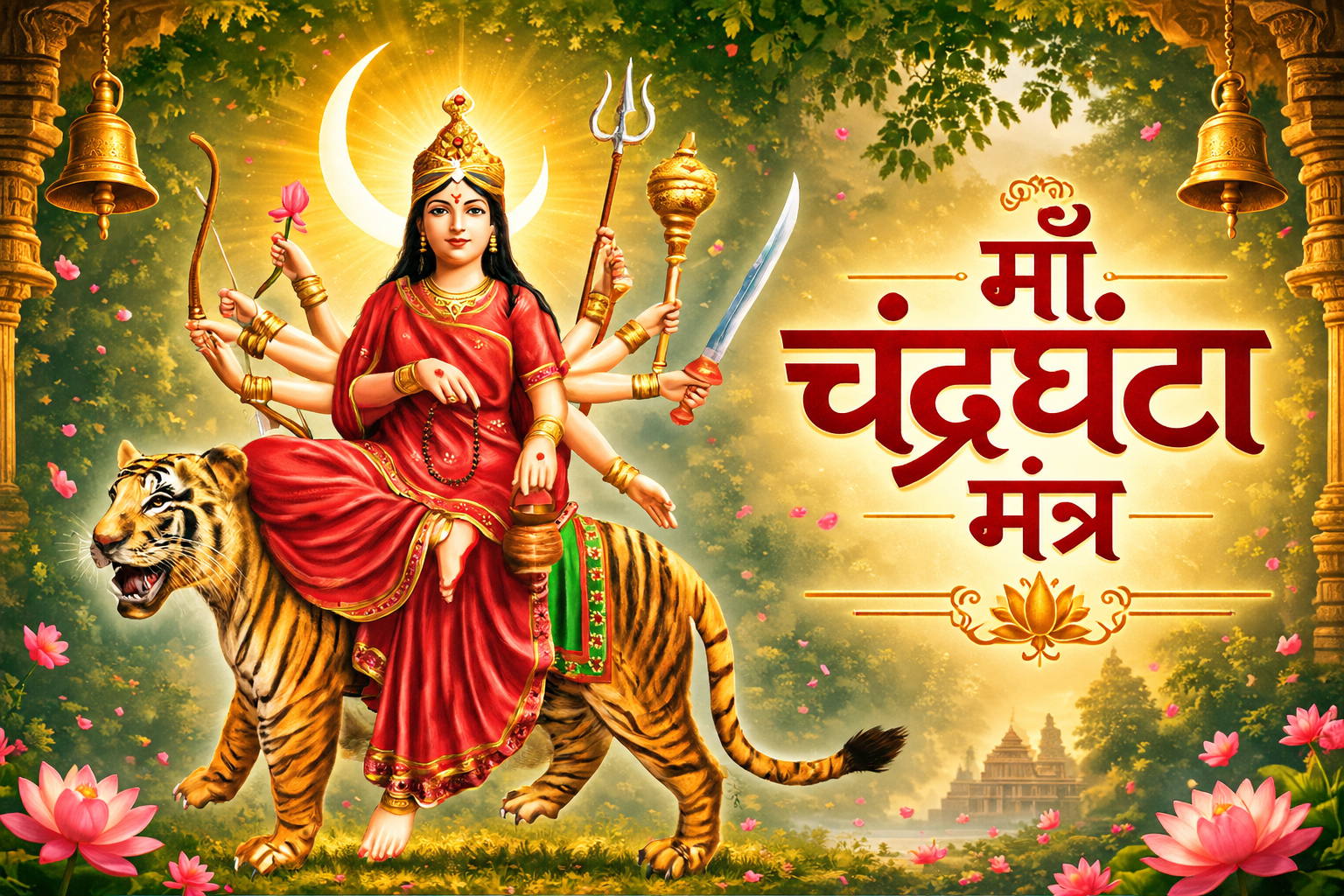
Goddess Chandraghanta is traditionally depicted with a radiant golden complexion, a crescent moon on her forehead and ten hands carrying various divine weapons and sacred objects. She is commonly portrayed riding a lion or tiger, representing fearlessness, strength and the ability to confront negative forces.
Her hands may hold a trident, sword, bow, arrow, mace, discus, lotus, bell and sacred vessel, while one hand is raised in a gesture of blessing.
Each element of her divine form carries spiritual significance.
- The crescent moon: Represents the mind, its changing nature and the possibility of attaining greater awareness.
- The bell: Symbolises the unification of scattered thoughts and the awakening of spiritual consciousness.
- The divine weapons: Represent the strength required to overcome ignorance, negativity and inner obstacles.
- The lion or tiger: Signifies courage, determination and mastery over fear.
- The blessing gesture: Expresses divine protection, compassion and reassurance to devotees.
Her third eye, traditionally understood as a symbol of awakened perception, represents the ability to look beyond superficial appearances and recognise deeper spiritual truths.
Together, these attributes reveal the dual nature of the Divine: gentle and compassionate when nurturing life, yet powerful and fearless when confronting injustice and negativity.
The Symbolism of Beauty and Divine Consciousness
Beauty is often understood in terms of physical appearance, attractive surroundings or pleasing experiences. The spiritual understanding of Devi Chandraghanta invites us to look beyond these external qualities.
The beauty we experience in nature, the innocence of a child, the loyalty of an animal and the kindness expressed through human relationships can all inspire a sense of wonder and reverence.
From a devotional perspective, these experiences remind us of the divine energy present throughout creation.
When we become more conscious of this presence, our understanding of beauty changes. We begin to appreciate not only what pleases the eyes but also what brings peace to the heart, wisdom to the mind and compassion to our actions.
Goddess Chandraghanta symbolises this deeper dimension of beauty. Her worship encourages us to nurture purity of intention, kindness in relationships and awareness in everyday life.
For a spiritual seeker, recognising beauty in the ordinary can become a meaningful step towards experiencing the sacred in all aspects of existence.
The Legend of Goddess Chandraghanta and Lord Shiva
According to Hindu tradition, Goddess Parvati undertook intense penance to attain Lord Shiva as her husband. Her unwavering devotion and spiritual determination eventually led Lord Shiva to accept her as his consort.
When Shiva arrived for their wedding, his unconventional appearance and extraordinary procession of ascetics, spirits and other beings frightened Parvati’s family and those gathered for the occasion.
Seeing their fear, Parvati assumed a powerful and formidable form associated with Chandraghanta. Her divine manifestation reflected both her determination to protect her loved ones and her ability to respond to a difficult situation with strength.
Parvati then persuaded Shiva to appear in a more gracious and approachable form. Shiva transformed his appearance, and the wedding proceeded in an atmosphere of celebration.
This sacred narrative illustrates an important spiritual principle: true strength does not exist merely to overpower others. It also protects, reassures and restores harmony.
The story of Chandraghanta reminds devotees that courage and compassion can coexist. Spiritual maturity is reflected in knowing when to remain gentle and when to stand firmly against fear, injustice and suffering.
Goddess Chandraghanta: Courage in the Face of Adversity
Life brings uncertainty, emotional struggles, disappointments and unexpected changes. At such moments, fear can influence our decisions and prevent us from seeing situations clearly.
The symbolism of Devi Chandraghanta encourages us to face these experiences with courage rather than allowing fear to control our actions.
Her association with the lion or tiger represents the strength required to confront challenges. Her weapons symbolise the determination to overcome harmful tendencies, while her blessing gesture reminds devotees that courage can be accompanied by faith and compassion.
In the context of spiritual practice, the obstacles we encounter are not always external. Anger, jealousy, insecurity, attachment and uncontrolled desires can also disturb our inner balance.
By cultivating self-awareness, disciplined living and regular meditation, we can gradually learn to respond to difficulties with greater clarity.
The worship of Chandraghanta therefore offers more than a devotional observance. It provides an opportunity to reflect on our own inner strength and develop the confidence to move forward with awareness.
The Bell as a Symbol of Unity and Inner Harmony
The bell occupies an important place in Hindu worship. Its sound marks the beginning of a sacred ritual, draws attention away from everyday distractions and helps create an atmosphere of reverence.
In the spiritual symbolism of Chandraghanta, the bell can also represent the movement from mental fragmentation towards inner unity.
The human mind often moves between memories of the past, concerns about the future, emotional reactions and competing desires. When attention is constantly divided, it becomes difficult to experience peace.
Meditation offers a way to observe these movements without becoming completely absorbed in them.
Rather than suppressing every thought or attempting to escape from our emotions, we can learn to recognise them with awareness. Gradually, the mind becomes less reactive, and attention can settle into a more peaceful state.
The sound of a bell serves as a reminder of this possibility: many thoughts and emotions can arise, yet we can cultivate a deeper centre of stillness within ourselves.
For practitioners of Kriya Yoga, this reflection connects naturally with the importance of disciplined spiritual practice, mindful attention and the gradual refinement of awareness.
The Importance of Meditation in the Worship of Chandraghanta
Navratri offers a meaningful opportunity to deepen our spiritual practice and reflect on the qualities represented by the different manifestations of the Divine Mother.
On the third day, meditation on Devi Chandraghanta can become a practice of cultivating courage, mental clarity, emotional balance and compassion.
A simple contemplative practice may include the following steps:
1. Find a quiet space
Sit comfortably in a peaceful place and allow the body to settle. Keep the spine naturally upright and relax unnecessary tension.
2. Bring attention to the breath
Observe the natural rhythm of breathing without forcing or controlling it. Allow the mind to gradually become more attentive to the present moment.
3. Reflect on the qualities of Devi Chandraghanta
Contemplate courage, compassion, strength and inner harmony. Consider how these qualities can be expressed in your thoughts, relationships and everyday decisions.
4. Observe thoughts without judgement
When thoughts or emotions arise, acknowledge them without becoming lost in them. Gently return your attention to the practice.
5. Carry awareness into daily life
Let meditation become a foundation for conscious action. Practise patience during disagreements, courage during difficulties and kindness in your interactions with others.
Those following an established Kriya Yoga discipline may incorporate their regular practice according to the guidance of their teacher.
The purpose is not simply to seek a temporary feeling of calmness, but to develop a more conscious relationship with the mind and a deeper understanding of one’s spiritual nature.
Experiencing the Grace of the Divine Mother
The grace of Devi Chandraghanta is traditionally associated with courage, protection and the strength to overcome obstacles. Her worship reminds devotees that fear need not determine the course of their lives.
When devotion is accompanied by self-discipline and sincere spiritual inquiry, it can encourage a more balanced approach to life’s experiences.
Joy and sorrow, success and failure, comfort and difficulty are all part of the human journey. Spiritual awareness helps us meet these experiences with greater maturity, without losing our sense of purpose or compassion.
The Divine Mother is worshipped not only as a source of protection but also as a reminder of the sacred potential within life itself.
Through prayer, meditation and conscious living, devotees can reflect on how to bring greater harmony into their minds, relationships and actions.
Celebrating the Third Day of Navratri Through Kriya Yoga
Navratri is a time of devotion, reflection and spiritual renewal. Each form of Goddess Durga offers an opportunity to contemplate a different dimension of divine energy and its expression in human life.
Goddess Chandraghanta reminds us that beauty can inspire reverence, courage can overcome fear, and a restless mind can gradually become more focused through sincere spiritual practice.
For those exploring the path of Kriya Yoga, her symbolism offers an invitation to turn attention inward, develop discipline and deepen awareness through regular practice.
As we honour Devi Chandraghanta, let us seek not only external blessings but also the inner qualities that allow us to live with courage, clarity, compassion and wisdom.
May the Divine Mother’s grace inspire us to overcome negativity, maintain harmony amid life’s changing circumstances and recognise the sacred presence that gives meaning to our existence.
Jai Maa Chandraghanta!